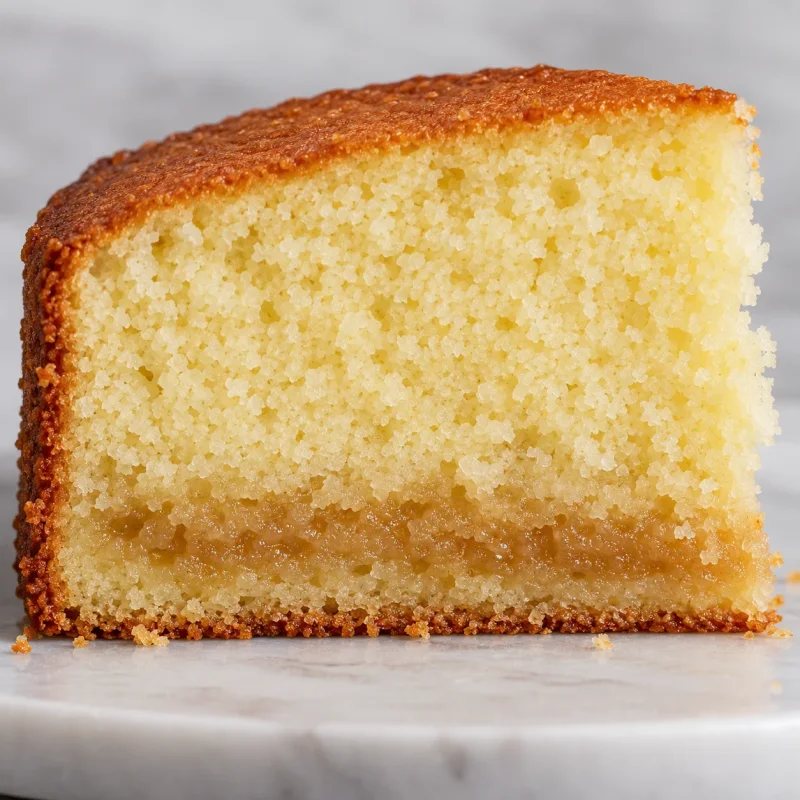
A gummy cake has a sticky, rubbery, paste-like, or compressed section of crumb that is noticeably different from the intended texture. The first diagnostic split is simple: is the affected area genuinely underbaked, or is it a baked crumb that compressed into a gummy band?
For the broader symptom map, use the cake troubleshooting guide.
Wet center and gummy crumb are not the same failure
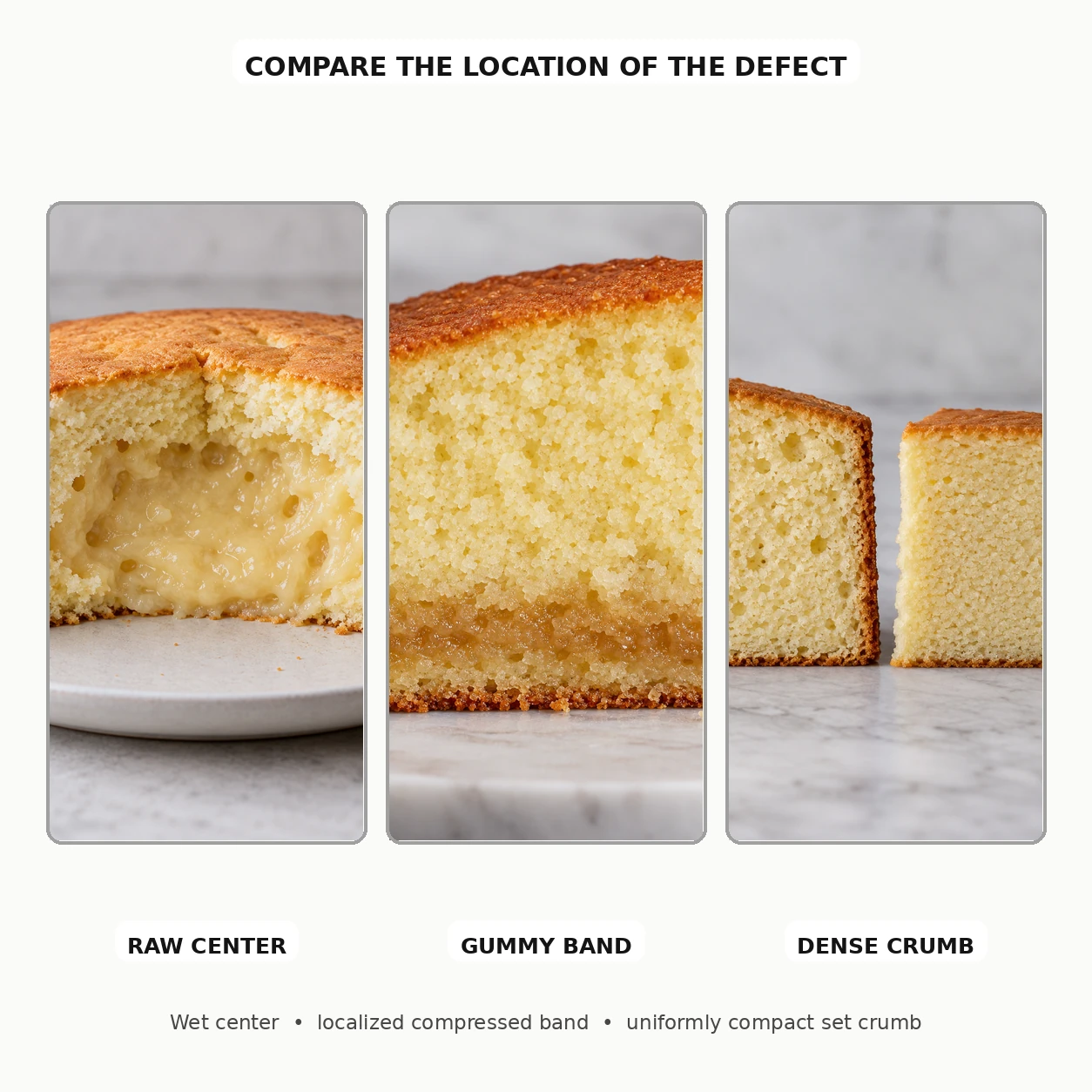
A truly raw center looks glossy, batter-like, and visibly unset. It usually occupies the deepest part of the cake and may not hold a normal crumb when cut.
If that describes the result, diagnose cake that is raw in the middle first. The priority is heat transfer and doneness.
A gummy cake can be fully baked enough to lose the raw-batter appearance while still containing a dense sticky streak or compressed layer. That pattern needs closer inspection of mixing and structural stability.
Look at where the gummy area appears
Location is useful evidence:
- Center only, wet and pasty: incomplete baking is the leading explanation.
- Dense sticky band near the bottom: review final mixing, bowl scraping, and whether the batter developed the intended structure.
- Gummy streak directly under a sunken area: the crumb may have compressed when the cake rose and then collapsed.
- Whole cake heavy but not sticky: route the problem to dense cake.
This location-first approach is more reliable than calling every moist cake "underbaked."
Undermixing can create compressed gummy layers
Some cake methods require more final mixing than cautious bakers expect. King Arthur Baking's test-kitchen work has shown that undermixing certain creamed or reverse-creamed batters can leave underdeveloped structure and a compressed lower layer.
Complete the recipe's specified final mix. Scrape the bottom and sides of the bowl so flour, fat, and liquid are evenly incorporated. Stopping as soon as the last visible flour disappears is not correct for every formula.
The target is a homogeneous batter with the structure that particular method requires.
Overmixing and over-creaming can create a different path to gumminess
The opposite error is also possible. Excessive mixing after flour is hydrated can strengthen gluten beyond what a tender cake needs. Over-creaming butter and sugar can introduce more aeration than some formulas can stabilize, encouraging a high rise followed by collapse and compressed streaks.
That is why "mix less" and "mix more" can both be bad advice when they are detached from the recipe.
If the gummy band appears together with a visible depression, use the guide to cake that sinks in the middle to diagnose the collapse itself.
Check leavener when the gummy layer follows poor rise or collapse
Recent King Arthur test-kitchen guidance on dense gummy streaks, sometimes called cleaching, identifies both too little and too much leavener as possible contributors.
Too little effective leavener can leave the cake poorly risen and compressed. Too much can create excessive expansion that later collapses. Verify the quantity, product type, and freshness rather than adjusting leavener solely from the appearance of one failed cake.
Cool the cake before judging the final texture
Warm cake is softer and contains mobile moisture. Cutting very early can compress the crumb and make a normal moist center look wetter than it will once cooled.
Follow the recipe's cooling instructions before making the final texture diagnosis. Cooling cannot convert raw batter into baked crumb, but it can prevent a false gummy diagnosis.
Review formula changes only after process variables
If repeated batches remain gummy even when mixing, pan, oven, and doneness are controlled, review any formula changes.
Large additions of liquid, puree, sugar, fat, or other moisture-heavy ingredients can change setting behavior if the recipe was not designed for them. Restore the tested formula as the control before inventing a compensating flour or time adjustment.
What you can do with a gummy cake now
First decide whether the gummy area is actually raw. A visibly wet, batter-like center should not be tasted or served. If the cake is fully baked but has a localized compressed gummy band, cooling will not restore that damaged structure; trim the affected area only if the remaining crumb is fully baked and acceptable. If you cut the cake while it was still very warm, allow the rest to cool before deciding that normal moist crumb is genuinely gummy.
Causes, mechanisms, and fixes
| Cause | Mechanism | Matching fix |
|---|---|---|
| Center is genuinely underbaked | Starch, proteins, and the crumb structure have not fully set in the deepest zone | Correct pan depth, oven conditions, and doneness rather than changing mixing first |
| Batter is undermixed for its method | Ingredients and structure remain uneven, which can leave a compressed lower layer or streak | Complete the recipe's specified mixing endpoint and scrape the bowl thoroughly |
| Cake rises then collapses | Expanded cells lose support and compress into a sticky band as the structure falls | Diagnose leavener, aeration, and center setting before adding more bake time |
How to prevent gummy crumb on the next bake
- Cool the cake as directed.
- Cut through the affected area and note its exact location.
- If it is visibly wet and centered, investigate doneness.
- If it is a compressed streak beneath a depression, investigate collapse.
- If it is a bottom band, review final mixing and bowl scraping.
- If the entire crumb is heavy but set, diagnose density instead.
- Repeat the bake with one controlled correction.
The distinction to keep is: raw cake has not set; gummy cake may have set unevenly or compressed; dense cake can be fully set but insufficiently aerated.
Problem solving
Symptoms, causes and corrections
Visibly wet batter-like center
Likely cause: underbaking
What to do: Treat as doneness/heat-transfer first, not generic gumminess.
Thin sticky or compressed band near the bottom
Likely cause: mixing/emulsion fault or structural compression
What to do: Review mixing sequence and whether the cake rose then compressed.
Uniformly compact but fully set crumb
Likely cause: density rather than primary gumminess
What to do: Route to dense-cake diagnosis.