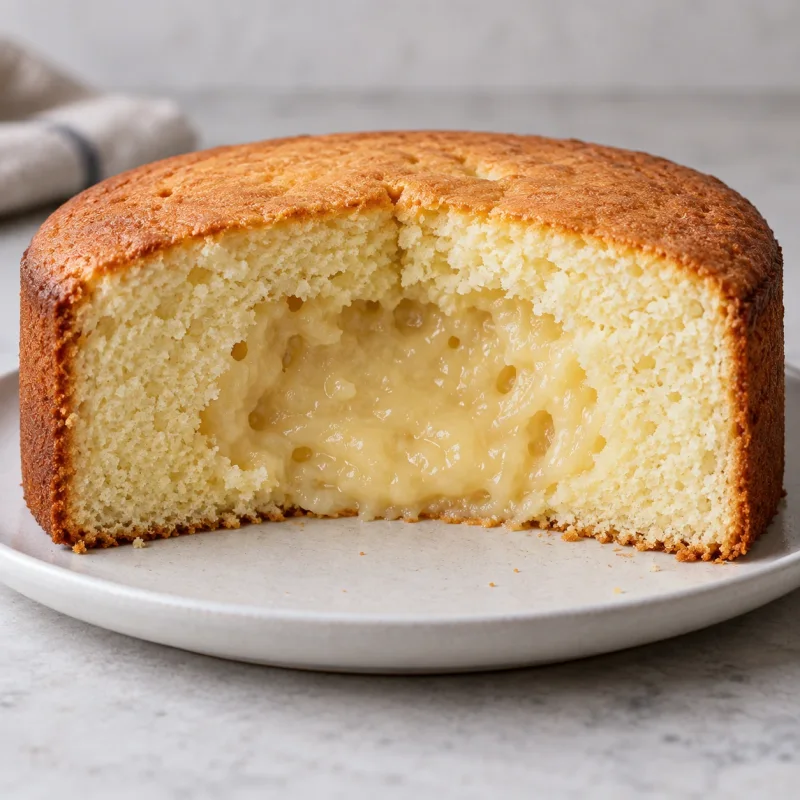
A cake is raw in the middle when the deepest part remains visibly wet, batter-like, or unset after the bake. The main diagnosis is insufficient effective heat and time at the center relative to the exterior.
The outside can brown and look finished first because the pan and hot oven air heat the cake from the outside inward. For mixed symptoms, use the cake troubleshooting guide.
Confirm that the center is genuinely underbaked
Let the cake cool as the recipe directs, then cut through the deepest part.
A raw center is wet, glossy, paste-like, or visibly batter-like and does not form a normal crumb. A sticky but formed crumb is different. If the center is set but rubbery or gluey, use the gummy cake diagnosis.
That distinction matters because a gummy crumb may need a mixing or structure correction rather than simply more oven time.
Pan size and batter depth are high-value checks
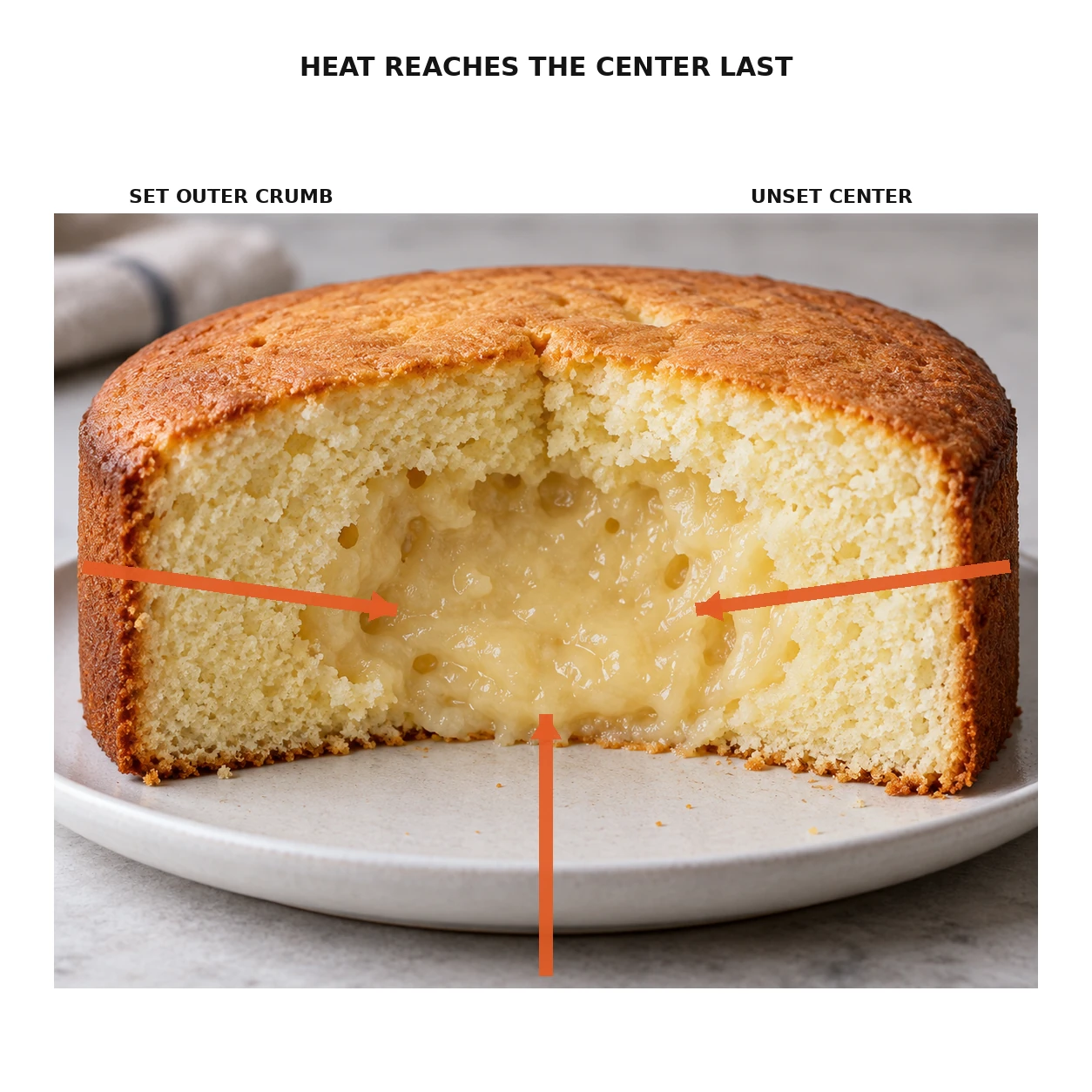
Putting the same amount of batter into a smaller pan creates a deeper layer. Heat must travel farther before the center sets, while the edge continues baking.
King Arthur Baking's pan-size testing shows that using a smaller-capacity pan can lengthen the bake and increase the risk of a dry exterior or slumped center.
For diagnosis, return to the intended pan and batter amount. If the recipe divides batter between layers, do not combine those layers into one deep cake and expect the original time to remain valid.
A dark pan can make the exterior look ready early
Dark metal can absorb heat aggressively, setting and browning the cake's sidewalls earlier than a light-colored pan.
That can create a misleading signal: the exterior appears deeply baked while the center is still catching up. King Arthur's testing with dark pans specifically notes the risk of a set exterior while the interior remains gummy.
If the recipe was developed for light-colored aluminum and you used a much darker pan, equipment is a useful variable to correct before changing ingredients.
Verify oven temperature, but do not assume "hotter" is the answer
A raw center can happen in an oven that is too cool because the cake never receives the expected heat. It can also occur when an overly hot environment sets and browns the outside so quickly that the cake is removed before the center finishes.
If the problem repeats, verify actual oven temperature rather than automatically raising the setting.
The goal is balanced baking, not maximum heat.
Use more than one doneness signal
A timer is a reference, not proof that the center has set.
Depending on the cake style, useful signs include:
- the center looks set rather than fluid,
- the surface springs back appropriately when lightly pressed,
- the edges begin to pull from the pan where that cue applies,
- a tester inserted into the center shows the crumb state the recipe describes,
- an internal-temperature target is met when the recipe provides one.
King Arthur's general cake guidance recommends combining several cues because no single test is perfect for every cake style.
Raw center and sinking can be the same failure sequence
If the center is insufficiently set, it may lose volume while the cake cools. The visible depression is then a consequence of the underbaked structure.
Use the guide to cake that sinks in the middle when the cake rose and then dropped significantly, especially if the depression extends beyond the visibly raw zone.
A clearly raw center should still be treated first as incomplete baking.
A dome can point to the same edge-to-center imbalance
A high center with firm edges means the center continued expanding after the perimeter had already set. If that high center is also wet, pan depth and heat distribution deserve immediate attention.
Use the cake doming guide when the shape itself is a major symptom.
What you can do with a raw center now
Do not taste or serve a visibly wet, batter-like center. If you discover the problem while the cake is still hot and it can safely remain in its pan, return it to the oven promptly and continue baking until the center meets the recipe's doneness cues; protect an already-browned top only with a recipe-appropriate shielding method. If the cake has cooled substantially, do not assume a later reheating will reliably restore the intended crumb or correct earlier food-safety handling. When in doubt, discard the unset portion.
Causes, mechanisms, and fixes
| Cause | Mechanism | Matching fix |
|---|---|---|
| Pan is too small or layer too deep | Heat reaches the center later while the edge continues to set and brown | Use the specified pan capacity and batter depth |
| Exterior sets too aggressively | A very hot oven or dark pan can make the outside look finished before the middle is ready | Verify oven temperature and use the intended pan material |
| Bake ends by timer alone | The scheduled time is reached before the physical center has actually set | Combine visual, touch, tester, and recipe-specific doneness cues |
How to prevent a raw center on the next bake
- Use the specified pan size, material, and batter amount.
- Verify oven temperature if the issue repeats.
- Bake on the intended rack.
- Begin checking near the recipe's stated time, then continue until the center meets the recipe's physical doneness cues.
- If the top browns early, use only a recipe-appropriate shielding method rather than ending the bake while the center is still unset.
- Record the actual pan, time, and doneness signs.
The correction is not simply "bake longer." The useful goal is to make the center and exterior reach the intended endpoint without sacrificing one to finish the other.
Problem solving
Symptoms, causes and corrections
Glossy or batter-like center with baked edges
Likely cause: center has not set
What to do: Check batter depth, pan size, actual oven temperature, and total bake time.
Dark exterior but wet center
Likely cause: edge heating is ahead of center heating
What to do: Check pan color/material before raising oven temperature.
Raw center followed by sinking while cooling
Likely cause: same incomplete-setting failure sequence
What to do: Solve doneness first, then reassess whether a separate collapse problem remains.